Saturday, March 2nd, 2024
In this session we will discuss lesbian fiction drawn from different categories.
Coming Out stories – Elaine Hutton will talk about some Coming Out stories, their significance, and how they evolved over time as the Women’s Liberation Movement took hold. e.g. All That False Instruction, 1975, by Kerryn Higgs/Elizabeth Riley; Rubyfruit Jungle, 1973, by Rita Mae Brown; Relatively Norma, 1985, by Anna Livia.
Lynne Harne will talk about two lesbian thrillers which challenge the stereotypes of femininity, Hen’s Teeth, 1996, and Stronger than Death, 1999, by Manda Scott.
Coming Out Stories
Rubyfruit Jungle, 1973, and All That False Instruction, 1975, are similar in some ways and very different in others. Both are first novels, young women looking back on their lives from very early childhood to early adulthood. They are both written on the brink of the Women’s Liberation Movement, when neither character had any support for their position, so it’s left to the reader to imagine how they will develop. But the first person perspective in both makes their stories very personal and we feel we’re sharing their experiences.
Rubyfruit Jungle
Molly Bolt is a lively, non-conforming youngster from the beginning. At the age of 11, she proclaims ‘I don’t care whether [people] like me or not. Everybody’s stupid, that’s what I think. I care if I like me, that’s what I truly care about.’(p 31) she tells her cousin Leroy and she maintains this confidence throughout the book. She discovers sex with girls early on, aged 11, and goes on to many more encounters, all positive. She grows up energetic and rough, handy with her fists, and rejects femininity in clothing and female roles, and, to the despair of her adoptive mother Carrie, refuses to know her place. She reminds me of Scout in To Kill a Mockingbird.
She’s not immune to social pressures however, but rises above them. Leroy has been her childhood companion, and they’ve had sex together. ‘Leroy never did get to be an accomplished kisser’, she discovers early, but as she starts to excel academically, ‘Leroy was getting more and more like any other redneck. It got to the point where he thought he owned me, just because we’d do it every now and then’. When she can ride his new motorbike better than he can he ‘tells her to shove off and that she’s ‘really a dyke’. (p 64)
In 1970, Rita Mae Brown was part of the group of women, the Radicalesbians, who staged a demonstration at the NOW conference which had excluded lesbians from the programme. They cut the lights, then turned them on to reveal the lesbians scattered throughout the audience, wearing Lavender Menace purple t-shirts, waving posters proclaiming : “TAKE A LESBIAN TO LUNCH!” “SUPERDYKE LOVES YOU!” “THE WOMEN’S MOVEMENT IS A LESBIAN PLOT!” . The group then distributed a 10-page, collectively written manifesto entitled “The Woman-Identified Woman,” with its famous opening line, “A lesbian is the rage of all women condensed to the point of explosion.”
Brown then co-founded The Furies, a lesbian feminist separatist commune, and it was against this background that Rubyfruit Jungle was eventually published in 1973, after being turned down by major publishing houses, by a small independent feminist press, Daughters Inc. run by oil heiress June Arnold (author of Sister Gin)
Brown’s active lesbian background translates into fictional form to some extent with this novel. Men, when they feature, do not come out well, shown to be intellectually inferior and no good in bed, and potentially dangerous. On sex with men – ‘…they all work the same show. Some are better at it than others but it’s boring once you know what women are like.’ (p 174)
And the film that drew the most applause on their project night ‘was a gang rape…with half the cast dressed as Martians , the other half, as humans. All the men mumbled about what a profound racial statement it was.’ (p 213). And ‘the guy who made the Martian rape went right into CBS as an assistant director for a children’s program. CBS was full up, they told me.’ (p 215) [when Molly applied for a job after graduation].
Isolation and difficulty for lesbians also features. Her friendship threesome with two other women at high school implodes when she gets together with one of them. Molly ends up furiously rejecting them both because of their reactions. Carolyn denies she’s a lesbian, as she’s ‘very feminine’, unlike Molly, Connie announces that she can’t be Molly’s friend anymore as she’d ‘be nervous and wonder if you’re going to rape me or something’. (p 94)
All that False Instruction.
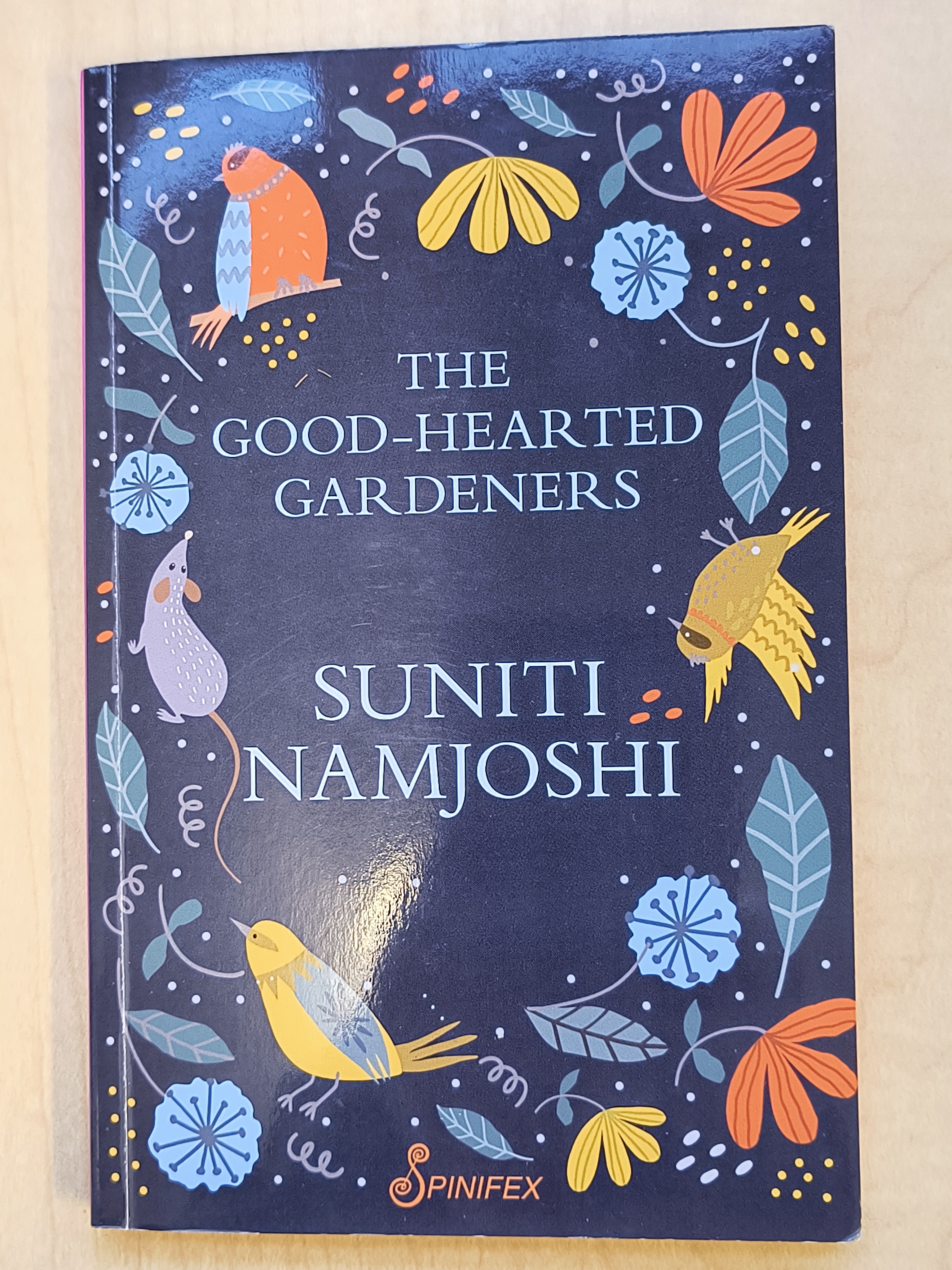
This was published first under a pseudonym, Elizabeth Riley. Kerryn Higgs, her actual name, wrote a chapter in Not Dead Yet, 2021, Origins, where she stated:
I grew up in the homophobic Australia of the 1950s – .. It had me subdued, even though it had not compelled me to marry and begin a life of regret and remorse. Though the counterculture gave a certain amount of relief, … before the Women’s Movement I lived in a state of suppressed fear.
This, in a way, is a summary of the novel, though the self-deprecatory, colloquial and lively language belies that description.
Like Rubyfruit Jungle, this novel is a fictional portrayal of feminist theory at the time – the realisation that the 1960s weren’t freedom for women, the discovery of the clitoral orgasm – she discovers it by accident, when a lover’s nipple brushes her clitoris, (p 75); the critique of male behaviour. What is really interesting is that Kerryn Higgs came to these realisations on her own, though in the three years before the book was finally published she inserted an end scene about the women’s movement which was just taking off. More of this later.
Maureen Craig’s upbringing is not dissimilar to Molly Bolt’s, except that she is isolated and unloved (except for her Grandmother) in her turbulent and confrontational rural family, where her authoritarian mother favours her younger brother, Ken, blaming and punishing her for his misdeeds. Like Molly, she escapes by excelling academically. Unlike Molly, Maureen’s lesbian encounters at university are at first awkward, fumbling, embarrassed (p 47), ‘floral pyjamas and huge breasts under flannelette’ (p 46), and terrified of being found out, but her last relationship is emotionally and physically liberating. However, with no WLM to sustain them, lesbianism is seen as unacceptable, dirty, slimy…the other young women she encounters all believe firmly, like Molly’s friend Carolyn, that ‘they’ll need men in the end.’
The novel’s strength is that it charts unflinchingly, with humour at times and frustration and sadness at others, Maureen’s journey towards being herself, and her never giving up hope that she’ll find a loving lesbian relationship, despite betrayals, setbacks, and ostracism. The limitations of Melbourne life are laid bare, in that we see Maureen escaping femininity in the only way available to her, as did other educated young Australian women, entering the masculine world, drinking heavily every night, hanging out with the blokes, swearing (p 199). She buys an old Holden and learns to service it, rejecting male help, and with her German friend Inga, (who is very critical of Australian men) gets a job on boats, abalone fishing at Mallacoota.
She has a series of encounters with men, in an effort to ‘get used to heterosexuality,’ and become normal. However, it is here her critique of patriarchy is most scathing, as well as comic, as she describes male behaviour. In all her encounters with men, Maureen remains detached and silently critical, and increasingly furious, as the men fulfil their own needs, and ignore hers. The writing is explicit – ‘Throat paralysed, as he moves, inwards like a cannonball, jarring guts’ (p 206); ‘Just lie against me, I want to say. It’s not all over for me. Let me come. Don’t leave this anger to breed. …If only he saw that I have needs like his own’…(p 230)
Unlike Rita Mae Brown, Kerryn Higgs was not a feminist activist. She won a fellowship to write her novel – on the basis of the first two chapters. She wrote most of it while in London in 1971-2, delivered the manuscript to Angus & Robertson, and returned to Melbourne. When she had left Australia she had had no contact with feminism at all, and observes that when she read The Female Eunuch in 1972, she was struck how similar Greer’s themes were to her own, though she adds, unlike herself, GG was aware of her context while she was not.
In her 2 years in London, she came across feminists, and when she returned home, remained involved. That is when she added (at editorial stage) an incident where she meets an American ‘out and proud’ lesbian feminist, Jody, who informs her that she lives in a women’s household, and that lesbianism isn’t only about sex, but politics. The words resonate with Maureen, though she doesn’t understand their significance at that point.
She showed ATFI (still unpublished) to her new friends, ‘who subjected it to a feminist fine toothcomb, where any reference that might be interpreted as anti-woman was identified and pointed out to me.’
In September, 1974, she showed the proofs (very late in the day) to her parents. Her mother was very upset, cried for 24 hours, and threatened to sue if it was published, as she saw herself as Lotty. Whether the character was based on her mother we don’t know.
After frantic negotiations with the publisher, the novel was published under the name Elizabeth Riley and was re-sited from Melbourne to Sydney. A&R were unable to publicise or launch with the author, who now admits she was relieved as ‘I had been imprinted, as was Maureen Craig, with the torture of other people’s ostracism and scorn.’ So although the book sank into obscurity, at the time it was noticed and reviewed, and had a large readership by word of mouth from the new active WLM. Finally, an American author found it by chance second-hand in 1989, and promoted it, met Kerryn by writing to Spinifex who put them in touch, and it finally led it to being reprinted. The information above is in the Spinifex reprint.
Relatively Norma
Nearly 10 years later, and well into the WLM, we are shown a very different kind of Coming Out. Minnie has gone to Perth, Western Australia, to visit her family, but she is already, unlike the characters in the first two novels, an established lesbian feminist. Her attempts to Come Out to her mother are comic, especially as her mother is obviously aware she’s a lesbian before she arrives, though she hopes she might become heterosexual, or ‘normal’ –
Beryl was thinking how nice it was to have little Minnie home again and why didn’t she stay in Perth and marry a tame Aussie. Perhaps if she introduced her to lovely John from work…(p 18)
But Beryl escapes motherhood and servitude at the end, making a public speech demanding Mother’s Liberation. Her daughters are left bereft ‘But mum, you can’t divorce your children.’
Beryl was soaring into the air.
-Minnie fixes me with her honesty, and confesses like The Ancient Mariner at every Opportunity: she’s gay. I’m pleased for her, I’m happy for her, but when I went away the whole day, she didn’t even notice I’d gone.
Beryl was zooming up to the ceiling.
-…I’m handing in my resignation, I’m nobody’s mother any more. (p 177)
So this is a whole different take on mothers, as Beryl is not discontented, bullying and sniping, but intent on having A Life of Her Own.
Relevance today
Brown and Higgs use their character’s mother’s marriages to point out the limitations of heterosexuality and femininity. The daughters reject their mothers’ values, rebel, and are ultimately rejected, especially when their lesbianism becomes known. But Relatively Norma was published when there were thriving lesbian/feminist publishing houses. Also, we were no longer on the cusp of feminism. Consciousness raising groups, and discussion among feminists, were common, and many women, as a result, had developed more sympathy for their mothers, and roles they had been forced into. It is notable that the first two novels, before the input of feminism, brought in sympathy for their mothers at the end. Kerryn Higgs does say she added the reconciliation with her mother at the editorial stage, ‘Maureen experiences a certain understanding for her mother…during 1973, in the new era of consciousness raising.’ And Molly Bolt makes a film of her mother talking about her life, for her final project at film school. Anna Livia goes further, in assigning Minnie’s mother a pivotal role in her novel, where she is not a drudge, or an upholder of heterosexual norms, but is determined to find herself and have a life of her own.
Rubyfruit Jungle is relevant today, in that it is funny, defiant, non-conforming – the heroine is fully self-determining from the very beginning. ATFI is relevant in another way. It is quite remarkable how Higgs writes the sex scenes with women – not pornographic, not romanticised, but very true to life in a way that resonates with lesbian experience. It’s clear also that friendship and intellectual stimulation is an integral part of the relationships. And her encounters with men echo what women were exploring – the lack of satisfaction with sex, the way men ignored women’s needs, how women were reticent about putting their own desires forward. She provides for us a stark contrast between heterosexual and lesbian sex. (Some male critics hated the book and talked of the feminist mafia when it was first published). It is also relevant in showing how a conformist society, without the presence of feminism, exerts such a powerful straightjacket on young women who aspire to be different, and in many cases, wrecks their lives or stops them from becoming fully themselves. Shades of today, and why it’s so important to get to young women and stop the grooming into the transgender cult. The novel is, in turn, funny, sad, anger making, but mainly, truthful of lesbian experience, and I highly recommend it.
Brown, Rita Mae, Rubyfruit Jungle (1973), Vintage Classics, 2015
Higgs, Kerryn, All that False Instruction (1975, Angus & Robertson), Spinifex Press, 2001
Livia, Anna, Relatively Norma, Onlywomen Press, 1982
Copyright © Elaine Hutton 2024
Lesbian thrillers
In second wave lesbian feminism there were a number of novels published in
what was then known as ‘detective fiction’. Most of these books were written
by US writers, such as ‘Murder at the ‘Nightwood Bar’ (l987) by Katherine V
Forrest, and ‘She Came in a Flash’ (1988) by Mary Wings. In the UK there were
some early detective novels written by Val McDermid whose main character
was an investigative journalist working in Glasgow.
However, more recently lesbian thrillers have achieved fame and awards.
These are books written by Manda Scott and include ‘Hen’s Teeth’ and ‘Stronger than Death.’ Hen’s Teeth was first published in l996 by Women’s Press and then in 2005 by Headline in paperback. Stronger than Death was published in 1999 by Headline.
Some background on Manda Scott.
Manda Scott trained as a Vet and originally lived in Glasgow. However, in both
of these books she demonstrates a good understanding of being a hospital
medic. She was also a mountain climber and her knowledge of mountain
climbing is reflected in each book. Hen’s Teeth was shortlisted for the Orange Prize and Stronger than Death for an Arts Council Prize in English Literature.
They are really brilliantly written and one of the main factors about them is
that they represent a lesbian community set in Glasgow where being lesbian is
seen as normal. They also reflect a strong lesbian network where most of the
lesbians know each other.
The 2 main characters in both these books are Kellen Stewart and Lee
Anderson. They are trained medics at the Glasgow Westenr Hospital although
Kellen has re-trained as a psycho therapist. Lee Anderson works in pathology
and undertakes post mortems. Kellen, herself is a part owner of a farm near
Glasgow that she purchased with her ex-lover, Bridget where they kept horses
and provided horse rides. This farm serves as one of the main settings.
Another key aspect of these books is that they do not turn to men for help as
they are skilled in manual trades. For example, they are able to change locks
and undertake their own building work, where necessary.
Both are focused on finding out about the murders. These include the murder
of Bridget, Kellen’s ex-lover in Hen’s Teeth, as well as that of Bridget’s brother,
who had his own lab and was a scientist. In the second novel Stronger than
Death, there is a series of murders and Lee, herself becomes a police suspect.
But neither Lee nor Kellen trust the police and are set on identifying the
murderers themselves. Their skills in rock climbing come in useful in resolving
the murders.






 Lesbian History Group